Fraudsters continue to adopt new tactics and technologies, making scams harder to spot: Nowadays they can arrive as a familiar voice on the phone, panicked and urgent, asking for an emergency money transfer. Or as a convincing warning about tariff charges on a recent order. Or something else inspired by the news. Keeping up with the threat has never been more challenging — or more important.
Most Canadians recognize the rising threat of fraud, and many are familiar with measures they can take to stay a step ahead of it. But despite the risks, many aren’t following through on critical actions they can take to protect themselves, according to a new Interac survey of 1,500 adults from coast to coast.
The survey revealed that Canadians are concerned about the growing frequency and sophistication of the fraud threat in their own lives. Nearly two-thirds (63 per cent) of those surveyed said they feel more exposed to fraud risks now than in the past, while more than half (54 per cent) worry they’ll be targeted in the next six months.
But when it comes to action, there are concerning gaps. A person might know about two-factor authentication or creating unique passwords for each website and service, but that doesn’t always translate to taking the threat seriously enough to follow through, said Mark Hines, Head of Product, Fraud at Interac.
“What we’re seeing is a ‘knowledge-action gap.’ These results show us why it’s important to keep urging Canadians to take fraud prevention seriously,” he said. Just how deep is the knowledge-action gap? Here’s what the data revealed:
1. Canadians are aware of the growing and evolving threat
Most of us know that scams are on the rise (and earlier Interac research showed how frustrated Canadians have become). Adding to the challenge now, Hines said, are the tactics fraudsters are developing to create scams that mislead people by mimicking real life — using highly convincing voice impersonations, for example, or exploiting the confusion that can surround news events like U.S. tariffs and the rising cost of living.
Canadians have taken note: Seventy-nine per cent of survey respondents agreed that AI is making it easier and faster for fraudsters to create convincing, timely scams. According to cybersecurity expert Chris Mathers, they should be concerned about fraudsters developing new tools and tricks. In a recent conversation with Interac he said, “The entrepreneurial nature of organized criminal groups is absolutely remarkable and immeasurable.”
2. Many don’t believe fraud will happen to them
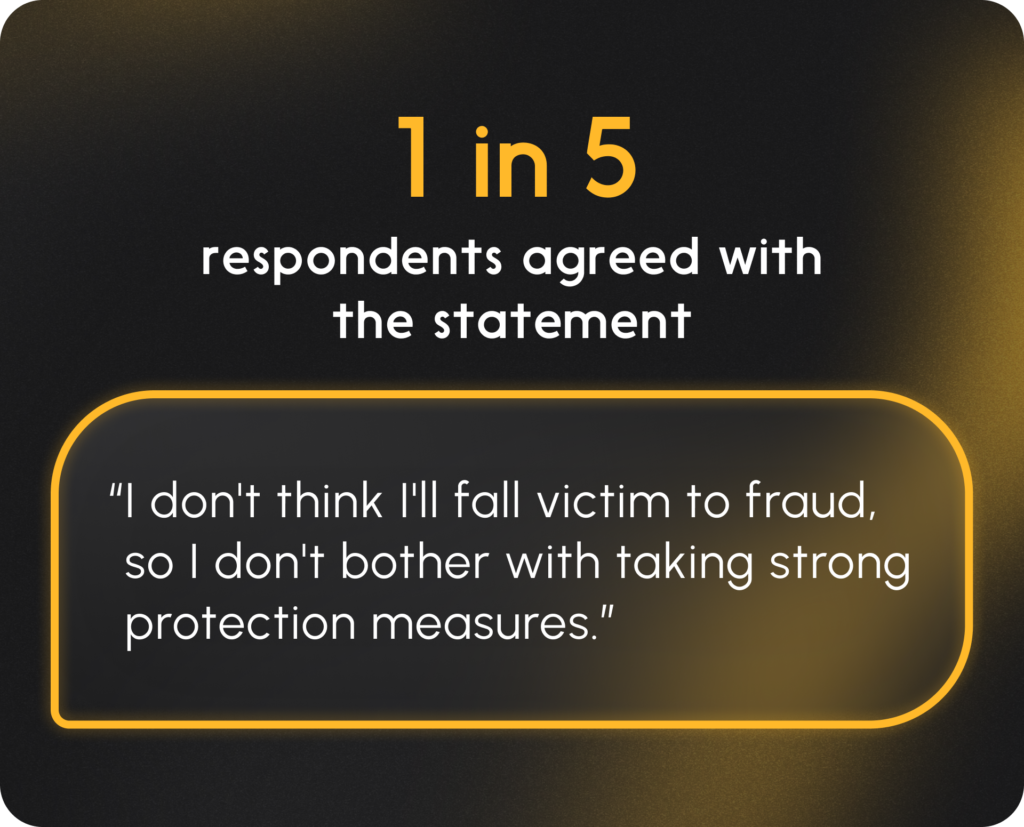
Despite this heightened awareness, one in five respondents said they don’t take strong protection against fraud because they don’t think they’ll personally fall victim. That kind of complacency can be a mistake, because anyone can be targeted and compromised, Hines said.
3. The more complicated the step, the less likely Canadians are to take it
Canadians widely practise some foundational fraud prevention behaviours, like being cautious about clicking links, signing up for two- or multi-factor authentication, using secure payment methods and regularly checking their bank statements. At least four in five Canadians reported doing all of the above — which Hines said shows “that the fraud prevention education that we and other organizations have been doing for years has had an impact in people’s daily lives.”
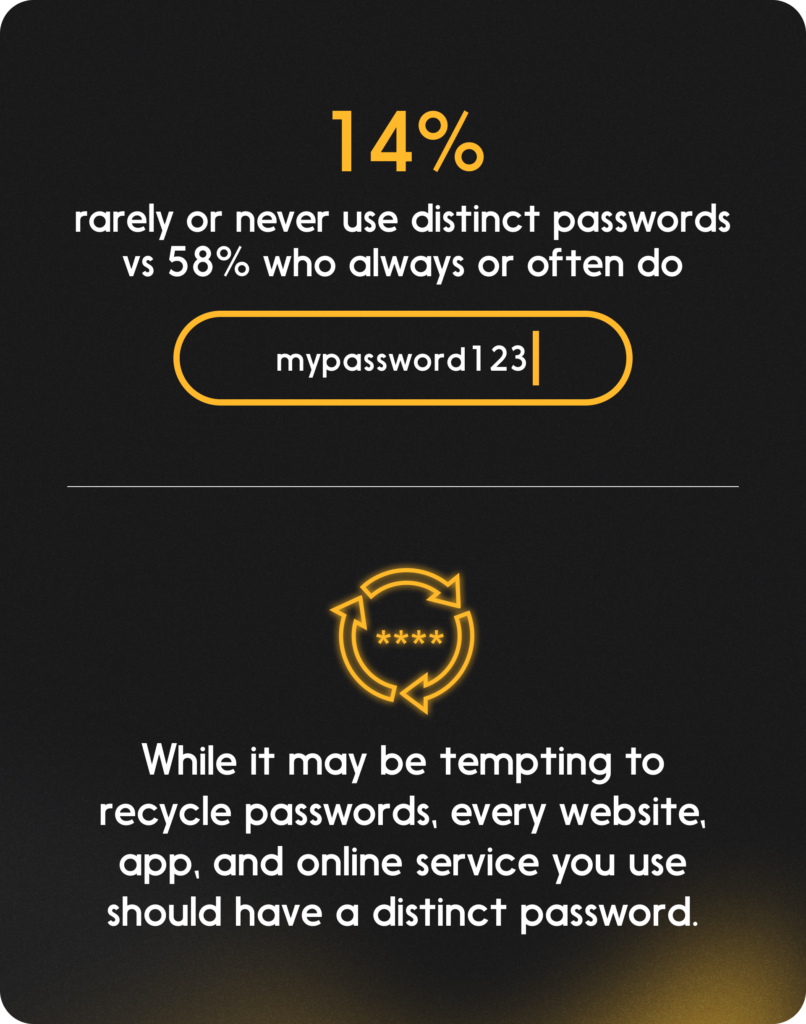
Yet adoption drops sharply for more complex, proactive protections that can potentially foil some of the newer, technologically powered fraud styles. When it comes to three key actions — updating software and apps, enabling two-factor authentication and using unique passwords for each online account — the uptake is much lower (only about a third of Canadians said they always or usually do each action).
The lack of adoption — or even familiarity with — family passwords is among the most glaring gaps identified in the Interac survey. Anti-fraud authorities have recommended that families establish a secret password or phrase that only family members know to verify someone’s identity during unexpected calls or messages requesting help or money. Most Canadians haven’t enacted a family password, and 13 per cent reported never having heard of the practice to begin with.
4. Many Canadians know they could be doing a better job on fraud prevention
Many believe they could protect themselves better — if only it were easier to do so.
More than half (53 per cent) of respondents said they feel they should be doing more, but they find it overwhelming. For a majority (57 per cent), time concerns are what hold them back from adopting fraud prevention measures.
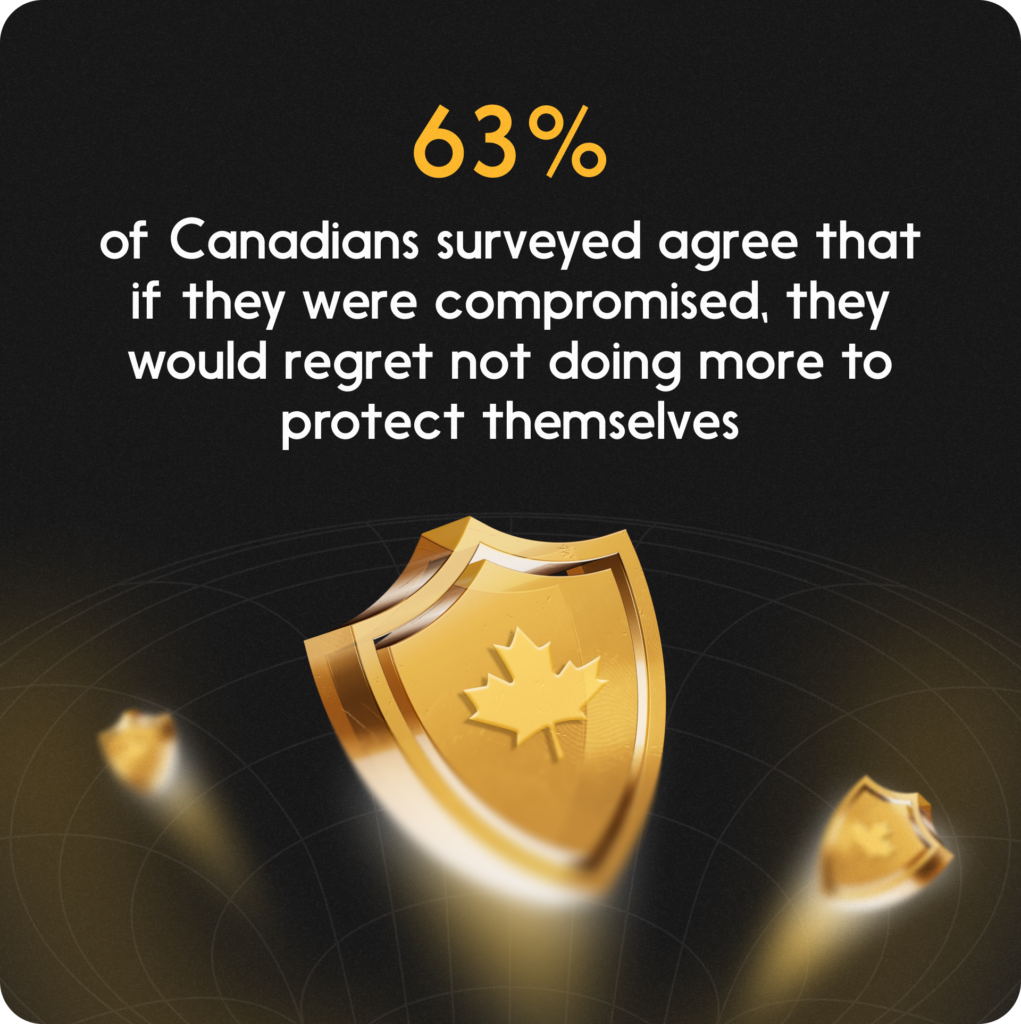
A possible motivation for taking action: The emotional consequences of fraud can weigh heavily, as many Canadians are aware (63 per cent of those surveyed said they would regret not having done more to protect themselves if they were compromised).
The good news? Some protective measures can be implemented quickly, Hines noted — like enabling two-factor authentication for an email account, or setting software and operating system updates to download automatically. The latter ensures that the user has the latest digital security settings and all bug fixes installed without having to remember to do so. And neither step should take more than a few minutes.
5. Canadians want fraud prevention to be a collective effort
Many Canadians believe the responsibility of dealing with fraud shouldn’t be theirs alone — they’re looking to financial institutions and others for protection as well. Three-quarters agreed that individuals should not bear the sole burden of fraud prevention, while 84 per cent agreed that the financial industry should do more to protect them.
While Hines continued to stress that individual Canadians must take steps to protect themselves against fraud, he also said it’s in corporate Canada’s best interest to strengthen fraud protections. “If Canadians fear digital technologies to the point of not using them, it will hold back Canada’s digital prosperity,” he said.
“That helps explain why Interac is committed not only to providing simple-to-use, secure payment and verification transactions, but also to encouraging Canadians to keep taking the necessary steps to safeguard themselves against fraud. Canadians have to understand the urgency of closing the knowledge-action gap in their own lives.”
Sign up to receive regular updates on fraud, security and other insights with Interac newsletters.